
Influencer marketing has moved far beyond awareness campaigns and vanity metrics. Today, brands invest in influencer collaborations because they deliver tangible business outcomes—from increased conversions and lower customer acquisition costs to improved content performance and faster market penetration.
For marketers evaluating ROI-driven channels, influencer marketing offers a unique blend of performance marketing and brand amplification. When executed with clear objectives and measurable KPIs, it becomes a powerful lever for growth across industries such as fashion, beauty, SaaS, fitness, finance, and eCommerce.
This article explores the practical benefits of influencer marketing, focusing on real-world business results, execution advantages, and applications that brands can implement immediately.
Why Influencer Marketing Is a Performance Channel, Not Just Awareness
Modern influencer marketing is data-backed and outcome-oriented. Brands now use influencers to:
- Drive qualified traffic
- Improve conversion rates
- Generate reusable content
- Support product launches
- Reduce paid advertising costs
Unlike traditional ads, influencer campaigns integrate directly into purchase journeys, making them easier to attribute and optimize.
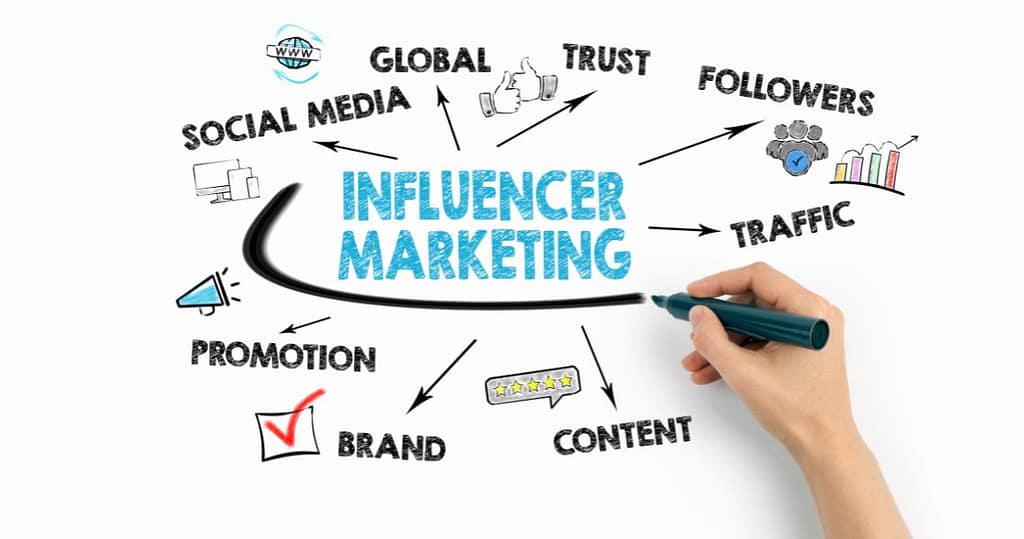
Benefit 1: Higher Conversion Rates Through Warm Audience Exposure
One of the most measurable benefits of influencer marketing is conversion efficiency.
How It Works in Practice
Influencers expose products to audiences already aligned with a specific niche—beauty enthusiasts, fitness-focused users, startup founders, or fashion shoppers. This alignment reduces friction in the buyer journey.
Real-world application:
- Brands use trackable links, promo codes, or landing pages
- Conversion rates from influencer traffic often outperform cold paid ads
- Influencer-driven visitors spend more time on-site and bounce less
Why This Matters
- Lower cost per acquisition (CPA)
- Faster purchase decisions
- More predictable funnel performance
SEO keyword integration: influencer marketing conversion rates, influencer ROI, influencer-driven sales
Benefit 2: Reduced Customer Acquisition Costs (CAC)
Influencer marketing often delivers lower CAC compared to paid social and display ads, especially when leveraging micro and mid-tier creators.
Practical Use Case
Instead of paying repeatedly for impressions, brands:
- Pay once for content that drives long-term traffic
- Reuse influencer content across paid ads, email campaigns, and landing pages
- Extend ROI beyond the initial campaign window
Measurable Outcomes
- Lower CPM when influencer content is repurposed for ads
- Reduced testing costs for creative concepts
- Higher ROAS from influencer whitelisted ads
This makes influencer marketing especially valuable for scaling brands and performance-driven campaigns.
Benefit 3: Scalable Content Production at Lower Costs
Content creation is expensive. Influencer marketing solves this by acting as a distributed content engine.
What Brands Gain
- Product photos
- Short-form videos
- Tutorials and demos
- Lifestyle imagery
- Testimonials and UGC-style assets
Instead of producing everything in-house, brands leverage influencers as content partners.
Practical Applications
- Website product pages
- Social media calendars
- Paid advertising creatives
- Marketplace listings (Amazon, Shopify, Flipkart)
This content often performs better than studio-shot creatives due to its natural, in-context presentation.
SEO keywords: influencer-generated content, UGC marketing benefits, influencer content strategy
Benefit 4: Faster Market Entry and Product Launch Acceleration
Influencer marketing allows brands to enter new markets quickly without long awareness-building cycles.
How Brands Use This
- Launch products with creator seeding
- Generate early demand before paid ads scale
- Test messaging across different audience segments
Example Application
A DTC brand launching a skincare product may:
- Collaborate with 20 niche creators simultaneously
- Gather instant feedback and performance data
- Identify top-performing angles within days
This speed enables data-informed scaling decisions far faster than traditional campaigns.
Benefit 5: Improved Paid Advertising Performance
One of the most underutilized benefits of influencer marketing is its impact on paid media efficiency.
Why Influencer Content Works Better in Ads
- Looks native to social platforms
- Feels less promotional
- Drives higher engagement rates
Practical Execution
Brands repurpose influencer videos and images into:
- Facebook and Instagram ads
- YouTube Shorts
- TikTok Spark Ads
This typically results in:
- Lower CPM
- Higher CTR
- Better ROAS
Influencer marketing doesn’t replace paid ads—it strengthens them.
Benefit 6: Long-Term Traffic and SEO Value
Influencer marketing supports SEO in ways many brands overlook.
Tangible SEO Benefits
- Referral traffic from blogs, YouTube descriptions, and social bios
- Brand searches increase after influencer exposure
- Backlinks from creator websites and content platforms
Real Impact
Influencer mentions contribute to:
- Increased branded keyword volume
- Higher engagement signals
- Stronger digital footprint across platforms
Over time, this improves organic visibility and domain authority indirectly.
Benefit 7: Data-Driven Campaign Optimization
Influencer marketing today is measurable at every stage.
What Brands Track
- Click-through rates
- Conversion data
- Engagement quality
- Audience demographics
- Cost per result
Practical Optimization
Brands can:
- Double down on top-performing creators
- Eliminate underperforming formats
- Adjust messaging based on audience response
This transforms influencer marketing into a repeatable, optimizable growth channel, not a one-off experiment.
Benefit 8: Improved Product Education and Usage Demonstration
Many products require explanation. Influencers provide visual, real-world demonstrations that reduce buyer hesitation.
Best Use Cases
- SaaS tools
- Fitness equipment
- Beauty products
- Electronics
- Fashion styling
Seeing a product in action answers objections before they arise, leading to:
- Fewer returns
- Higher satisfaction
- Better post-purchase experience
Benefit 9: Strengthened Multi-Channel Marketing Ecosystem
Influencer marketing integrates seamlessly with:
- Email marketing
- Performance ads
- Affiliate programs
- Social commerce
- Retargeting campaigns
Instead of operating in isolation, it supports full-funnel marketing performance.
Key Metrics That Prove Influencer Marketing Value
To ensure tangible outcomes, brands track:
- Cost per conversion
- Revenue per influencer
- Assisted conversions
- Content reuse value
- Incremental lift vs baseline campaigns
These metrics provide clarity and accountability—critical for scaling investment.
Final Thoughts: Influencer Marketing as a Results-Driven Growth Lever
The real power of influencer marketing lies in its practical benefits—measurable revenue impact, cost efficiency, scalable content creation, and performance synergy across channels.
When aligned with clear objectives and tracked correctly, influencer marketing becomes:
- A conversion driver
- A content engine
- A paid media enhancer
- A market-entry accelerator
Brands that treat influencer marketing as a business growth tool, not just a branding exercise, consistently see stronger ROI and long-term value.
Follow us on Instagram @formandfly_27
Check out our Blog on Content Marketing: The Ultimate Guide to Engaging and Growing Your Audience


